With a large number of companies in the solar field, it is hard for you as a consumer to separate the good from the bad. The hyped claim from the realistic one. Frizzell have specialised in the rural solar sector for over fifteen years. We are farmers who still own our family farm and are fully embedded in the rural sector with its unique challenges.
We have recently become concerned that many solar array designs are not suitable for New Zealand conditions. Our system is designed to meet the challenges of our country from high winds to remote locations and the need for low maintenance with long life production.
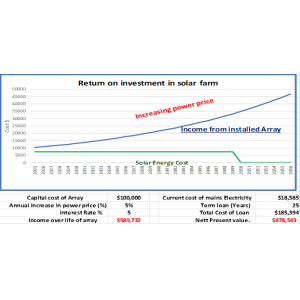
Electricity prices have increased by 30% in the last five years. With the lack of investment in generation in New Zealand and increased demand especially with increased sales of electric vehicles, electricity prices are likely to keep increasing at a faster rate than inflation.
If you have any questions or need more information please contact me.
Alastair Frizzell
Why choose the Frizzell Braided Rivers system:
Design: Our philosophy starts with designing the panel mountings so that they can withstand our varied weather events and challenges from wind, hail, or snow. We then orient and tilt the panels to obtain the best economic returns.
Weather: Many arrays are mounted on single rows of poles or even light rod supports. These mountings are often only reliably capable of resisting low velocity winds. We designed our system for all New Zealand conditions. We use two rows of 165mm diameter posts driven into the ground by nearly a meter to provide the best of ground support. For every ten panels we use eight of these posts, enough to withstand the highest winds.
Orientation and Tilt: Having the correct angle and tilt to capture the most energy significantly affects the economics of a system. Some systems have panels with orientation at east and west. These systems can drop performance by more than twenty five percent. This is profit you lose.
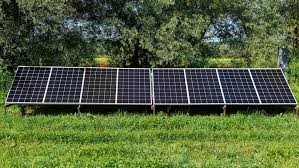
Low profile: We use a single row of panels, the array no higher than just over a meter off the ground. This system has advantages not only allowing easy access for cleaning and maintenance but also reduces the visual effect of the array. Arrays with multiple rows of panels adjacent to each other are hard to clean and difficult to check for maintenance.
Size of array: As part of the Braided River design system we calculate the returns from different sized arrays to get you the best returns on your investment. Most installers have standard size arrays which do not necessarily give you the best returns.
Best Prices: Getting the best plans from retailers can make a big difference to the returns you get from your installation. Buy prices for generated electricity can vary from 8c/kWhr to 21c/kWh. Fixed prices are typically in the 12c to 13c/kwhr. Some retailers offer variable rates depending on time of day and season. These rates can vary from 10c/kwh for summer off peak power to over 20c for winter peak power. Selecting the best plan for your generation and usage profile can significantly affect the economics of a solar system. With our Braided River system we can recommend the best options for you to maximise returns.
Typical returns: A solar array associated with an irrigation pump, can return better than 15% per annum. A standalone system can return 10% per annum.
Returns over time: A solar array has a fixed cost of generation. With inflation the price of electricity increases over time. The return on your investment increases (See graph below).
Finance: Most banks now offer interest free loans for Agricultural solar installations, typically upto $150,000.00 interest free for four to five years. Talk to us about our cash back interest offset for front payment.
An installed solar array not only guards against future power price increases but also eliminates fluctuations in electricity prices reducing price risk and simplifying cost budgeting.